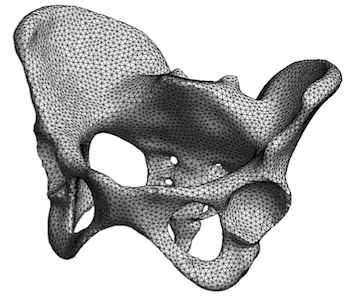
Gmsh is an open source 3D finite element mesh generator with a built-in CAD
engine and post-processor. Its design goal is to provide a fast, light and
user-friendly meshing tool with parametric input and flexible visualization
capabilities. Gmsh is built
around four modules
(geometry, mesh, solver and post-processing), which can be controlled with
the graphical user
interface, from
the command
line, using text files written in Gmsh's
own scripting
language (.geo files), or through the C++, C, Python, Julia and
Fortran application
programming interface.
See this general presentation for a high-level overview of Gmsh and the reference manual for the complete documentation, which includes the Gmsh tutorial. The source code repository contains the tutorial source files as well as many other examples.
Gmsh is distributed under the terms of the GNU General Public License (GPL):
pip install
            --upgrade gmsh
'
Make sure to read the tutorial and the FAQ before sending questions or bug reports.
git clone
          https://gitlab.onelab.info/gmsh/gmsh.git
'
pip install -i https://gmsh.info/python-packages-dev
        --force-reinstall --no-cache-dir gmsh
' (on Linux systems without
X windows, use python-packages-dev-nox instead of
python-packages-dev)
If you use Gmsh please cite the following reference in your work (books, articles, reports, etc.): C. Geuzaine and J.-F. Remacle. Gmsh: a three-dimensional finite element mesh generator with built-in pre- and post-processing facilities. International Journal for Numerical Methods in Engineering 79(11), pp. 1309-1331, 2009. You can also cite additional references for specific features and algorithms.
Please report all issues
on https://gitlab.onelab.info/gmsh/gmsh/issues.
Gmsh is copyright (C) 1997-2022 by C. Geuzaine and J.-F. Remacle (see the CREDITS file for more information) and is distributed under the terms of the GNU General Public License (GPL) (version 2 or later, with an exception to allow for easier linking with external libraries).
In short, this means that everyone is free to use Gmsh and to redistribute it on a free basis. Gmsh is not in the public domain; it is copyrighted and there are restrictions on its distribution (see the license and the related frequently asked questions). For example, you cannot integrate this version of Gmsh (in full or in parts) in any closed-source software you plan to distribute (commercially or not). If you want to integrate parts of Gmsh into a closed-source software, or want to sell a modified closed-source version of Gmsh, you will need to obtain a commercial license: please contact us for details.
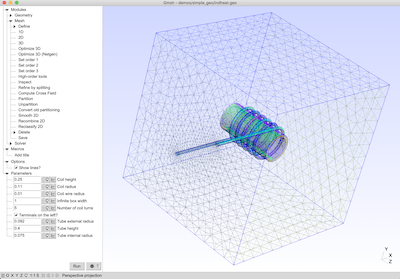
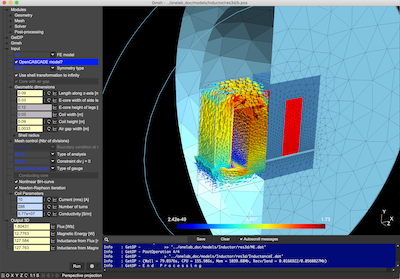
These are two screenshots of the Gmsh user interface, with either the light or dark user interface theme. See the ONELAB web site for more.
If you are looking for authentic versions of these manuscripts, several academic and public repositories host them:
The search for an "exclusive" version usually stems from the desire to see the and full manuscripts that are often excluded from standard text-only prints.
The term (often transliterated as Thawaqib al-Manaqib or Sawaqib-Ul-Manaqib ) refers to a significant genre of hagiographical literature in the Islamic tradition, specifically focused on the "virtues" or "miracles" ( manaqib ) of holy figures. sawaqub almanaquib pdf exclusive
Finding an of these texts offers researchers, students of Sufism, and history enthusiasts a window into the spiritual and social lives of historical Islamic figures, ranging from Rumi to Naushah Ganj Bakhsh. What is Sawaqub al-Manaquib?
: The author, Sadaqat Kunjahi, was inspired by an earlier 1695 biography by Ahmed Baig Lahori but expanded it into a more literary and colorful narrative. If you are looking for authentic versions of
Written in eloquent Persian, this work is a vital source for the Sufi order.
: Sultan Murad III ordered the Turkish translation in 1590, which led to the creation of lavishly illustrated manuscripts now held in prestigious institutions like the Topkapi Palace and the Morgan Library. Why Seek the "Exclusive" PDF? What is Sawaqub al-Manaquib
: Modern summaries and analyses of the Manaqib tradition are often available on platforms like Scribd and ResearchGate .
: The Ottoman versions are famous for their vibrant miniatures depicting Sufi rituals, historical events, and even controversial social depictions of the era.