Mujer Con Un Perro Se Queda Pegada Videos Completos De Zoofilia 40l Official
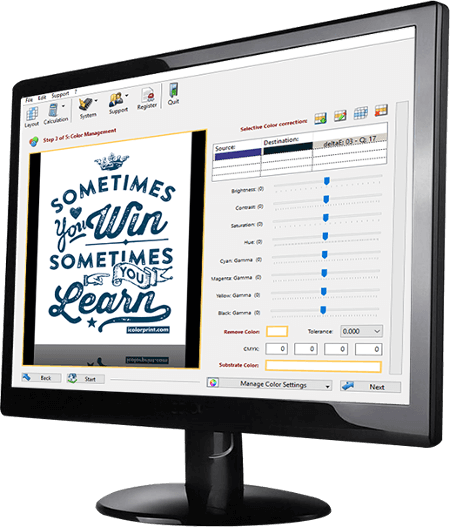
UNINET® has developed a series of software packages to enhance your IColor printing experience. The IColor® TransferRIP and ProRIP and ProRIP Essentials packages make it simple to produce spot color overprint and underprint in one pass. The Absolute White RIP helps you use an Absolute White Toner Cartridge in a converted CMYK printer, and create 2 pass prints with color and white. The IColor® SmartCUT suite allows your A4/Letter sized printer to produce tabloid or larger sized transfers! Use one or more with the IColor® 500, 600 and 800 series of transfer printers.
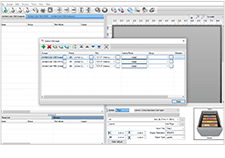
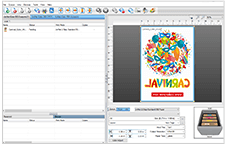
Use the IColor® ProRIP software to print white as an underprint or overprint in one pass.
This professional version is designed for higher volume printing with an all new interface. Design files can be printed directly from your favorite graphics program, as well as imported directly into IColor® ProRIP. We are entering an era where technology is
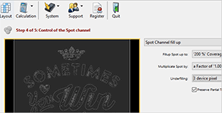
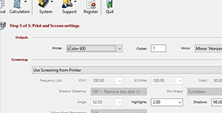
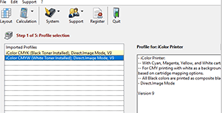
The IColor® ProRIP software allows the user to control the spot white channel feature. Three cartridge configurations are available: Spot color overprinting, where white is needed as a top color for textiles; Spot color underprinting for printing on dark or transparent media where white is needed as a background color and standard CMYK printing where a spot color is not needed. No need to create additional graphics with different color configurations – the software does it all – and in one pass! Enhance the brilliance of any graphic with white behind color! Veterinary scientists now use behavioral knowledge to modify
Compatible with Microsoft Windows® 8 / 10 / 11 (x32 & x64) only. higher growth rates
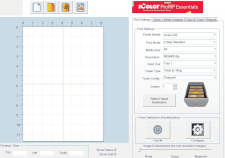
A simplified version of ProRIP which includes all of the most commonly used features of ProRIP with an easy to use interface. This Essentials version simplifies the printing process and allows the user to print efficiently and quickly without any training. All of the important and frequently used aspects of the software are included in this version, while all of the ‘never used’ or confusing aspects of the software are left out.
Comes standard with the IColor®540 and 560 models and is compatible with the IColor 550 as well.
Does not work with IColor 500, 600, 650 or 800 (yet).
Improvements over the ‘Standard’ ProRIP:
We are entering an era where technology is enhancing the vet’s ability to "read" behavior. Wearable technology—similar to fitness trackers for humans—can now monitor an animal’s sleep patterns, scratching frequency, and activity levels. In the near future, AI algorithms will likely assist veterinary scientists in predicting illness based on subtle behavioral deviations long before physical symptoms appear. Conclusion
For endangered species in captivity, veterinary science uses behavioral enrichment to mimic natural environments. This is crucial for successful breeding programs and the eventual reintroduction of species into the wild. The Future: AI and Behavioral Diagnostics
The "Fear-Free" movement has revolutionized how clinics operate. Veterinary scientists now use behavioral knowledge to modify the clinic environment—using pheromone diffusers, specialized handling techniques, and treat-motivated exams. Reducing cortisol levels during a visit doesn’t just make the pet happier; it ensures more accurate blood pressure readings, heart rates, and diagnostic results. 2. Strengthening the Human-Animal Bond
Animal behavior and veterinary science are two sides of the same coin. As we continue to peel back the layers of animal consciousness, the veterinary profession will continue to move toward a more holistic, "whole-animal" approach. By treating the mind as carefully as we treat the body, we ensure a higher quality of life for the creatures that share our world.
For decades, veterinary medicine focused almost exclusively on the physical health of animals—vaccinations, surgeries, and the eradication of parasites. However, as our understanding of the animal kingdom has evolved, so too has the realization that mental and physical health are inextricably linked. Today, the intersection of represents one of the most dynamic and essential fields in modern animal care. The Evolution of Clinical Ethology
The synergy between behavior and veterinary science extends far beyond domestic pets.
In agricultural science, understanding the herd behavior and stress responses of cattle, pigs, and poultry is vital. Lower stress levels during handling lead to better immune systems, higher growth rates, and overall better food quality.
Clinical ethology—the study of animal behavior in a veterinary context—has shifted from a niche interest to a core component of general practice. This change is driven by the understanding that a "healthy" animal is not merely one free of disease, but one that is mentally stimulated and emotionally stable.
We are entering an era where technology is enhancing the vet’s ability to "read" behavior. Wearable technology—similar to fitness trackers for humans—can now monitor an animal’s sleep patterns, scratching frequency, and activity levels. In the near future, AI algorithms will likely assist veterinary scientists in predicting illness based on subtle behavioral deviations long before physical symptoms appear. Conclusion
For endangered species in captivity, veterinary science uses behavioral enrichment to mimic natural environments. This is crucial for successful breeding programs and the eventual reintroduction of species into the wild. The Future: AI and Behavioral Diagnostics
The "Fear-Free" movement has revolutionized how clinics operate. Veterinary scientists now use behavioral knowledge to modify the clinic environment—using pheromone diffusers, specialized handling techniques, and treat-motivated exams. Reducing cortisol levels during a visit doesn’t just make the pet happier; it ensures more accurate blood pressure readings, heart rates, and diagnostic results. 2. Strengthening the Human-Animal Bond
Animal behavior and veterinary science are two sides of the same coin. As we continue to peel back the layers of animal consciousness, the veterinary profession will continue to move toward a more holistic, "whole-animal" approach. By treating the mind as carefully as we treat the body, we ensure a higher quality of life for the creatures that share our world.
For decades, veterinary medicine focused almost exclusively on the physical health of animals—vaccinations, surgeries, and the eradication of parasites. However, as our understanding of the animal kingdom has evolved, so too has the realization that mental and physical health are inextricably linked. Today, the intersection of represents one of the most dynamic and essential fields in modern animal care. The Evolution of Clinical Ethology
The synergy between behavior and veterinary science extends far beyond domestic pets.
In agricultural science, understanding the herd behavior and stress responses of cattle, pigs, and poultry is vital. Lower stress levels during handling lead to better immune systems, higher growth rates, and overall better food quality.
Clinical ethology—the study of animal behavior in a veterinary context—has shifted from a niche interest to a core component of general practice. This change is driven by the understanding that a "healthy" animal is not merely one free of disease, but one that is mentally stimulated and emotionally stable.
Use the IColor® TransferRIP software to print white as an underprint or overprint in one pass.
Designed for every day, short to mid run use, the IColor® TransferRIP software allows the user to control the spot white channel feature. Two cartridge configurations are available: White overprint, where white is needed as a top color for textiles; and white underprint for printing on dark or transparent media where white is needed a round color. No need to create additional graphics with different color configurations – the software does it all – and in one pass! Enhance the brilliance of any graphic with white behind color!
Compatible with Microsoft Windows 7 / 8 / 10 (x32 & x64) only.