
Picture Free - Indian Xxx Girl
State of the art timing analysis
with industry-hardened methods and tools.
State of the art timing analysis
with industry-hardened methods and tools.
...with industry-hardened methods and tools. T1 empowers and enables. T1 is the most frequently deployed timing tool in the automotive industry , being used for many years in hundreds of mass-production projects.
As a worldwide premiere, the ISO 26262 ASIL‑D certified T1-TARGET-SW allows safe instrumentation based timing analysis and timing supervision. In the car. In mass-production.
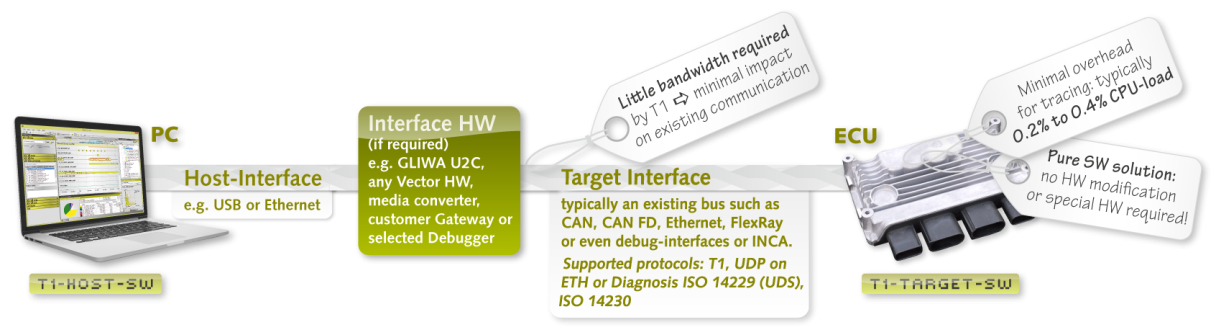
T1.timing comes with two extension options. Add-on product T1.streaming provides the possibility to stream trace data continuously — over seconds, minutes, hours or even days. Add-on product T1.posix supports POSIX operating systems such as Linux or QNX.
T1.timing comes with a modular concept and several plug-ins which are described in the following. Plug-ins can be easily enabled or disabled at compile-time using dedicated compiler switches such as T1_DISABLE_T1_CONT. To disable T1 altogether, it is sufficient to disable compiler switch T1_ENABLE which leaves the system in a state as of before the T1 integration.
In the modern digital landscape, the concept of the "girl picture" has transcended simple photography to become a central pillar of . As of May 2026, the intersection of AI technology, the "It-Girl" aesthetic, and social media trends has redefined how female imagery is produced, consumed, and internalized by global audiences. 1. The Rise of Synthetic Celebrities and AI Idols
The Evolution of the "Girl Picture": How Entertainment and Popular Media Shape Identity in 2026
: Established virtual influencers such as Lil Miquela and Noonoouri have evolved from static images into interactive figures, challenging the traditional boundaries of what constitutes a "media personality".
: Social media continues to circulate trends like "Baby Botox" and "Vampire Facials," which function as behavioral signals for how audiences adopt aesthetic treatments in real life. 3. Psychological Impact and Self-Objectification
: Frequent exposure to idealized selfies and sexualized images on platforms like Instagram and TikTok is strongly linked to decreased self-esteem and increased body dissatisfaction.
Despite lingering stereotypes, there is a discernible move toward more nuanced female representation in various media forms. DiGRA Digital Library
: Research indicates that many girls now experience "Appearance-Related Social Media Consciousness" (ASMC)—an ongoing awareness of whether they look attractive to an online audience even when alone.
Popular media in 2026 is dominated by highly specific visual trends that dictate the "It-Girl" wardrobe and social media presence.
The pervasiveness of curated female imagery in popular media has profound psychological effects, particularly on adolescent girls.
: Modern "It-Girl" staples now include a blend of high-low dressing, oversized logo sweatshirts, and specific "sock trends" designed to elevate basic outfits.
For POSIX-based projects, see T1.posix.
In the modern digital landscape, the concept of the "girl picture" has transcended simple photography to become a central pillar of . As of May 2026, the intersection of AI technology, the "It-Girl" aesthetic, and social media trends has redefined how female imagery is produced, consumed, and internalized by global audiences. 1. The Rise of Synthetic Celebrities and AI Idols
The Evolution of the "Girl Picture": How Entertainment and Popular Media Shape Identity in 2026
: Established virtual influencers such as Lil Miquela and Noonoouri have evolved from static images into interactive figures, challenging the traditional boundaries of what constitutes a "media personality".
: Social media continues to circulate trends like "Baby Botox" and "Vampire Facials," which function as behavioral signals for how audiences adopt aesthetic treatments in real life. 3. Psychological Impact and Self-Objectification
: Frequent exposure to idealized selfies and sexualized images on platforms like Instagram and TikTok is strongly linked to decreased self-esteem and increased body dissatisfaction.
Despite lingering stereotypes, there is a discernible move toward more nuanced female representation in various media forms. DiGRA Digital Library
: Research indicates that many girls now experience "Appearance-Related Social Media Consciousness" (ASMC)—an ongoing awareness of whether they look attractive to an online audience even when alone.
Popular media in 2026 is dominated by highly specific visual trends that dictate the "It-Girl" wardrobe and social media presence.
The pervasiveness of curated female imagery in popular media has profound psychological effects, particularly on adolescent girls.
: Modern "It-Girl" staples now include a blend of high-low dressing, oversized logo sweatshirts, and specific "sock trends" designed to elevate basic outfits.
| Vendor | Operating System |
|---|---|
| Customer | Any in-house OS** |
| Customer | No OS - scheduling loop plus interrupts** |
| Elektrobit | EB tresos AutoCore OS |
| Elektrobit | EB tresos Safety OS |
| ETAS | RTA-OS |
| GLIWA | gliwOS |
| HighTec | PXROS-HR |
| Hyundai AutoEver | Mobilgene |
| KPIT Cummins | KPIT** |
| Siemens | Capital VSTAR OS |
| Micriμm | μC/OS-II** |
| Vector | MICROSAR-OS |
| Amazon Web Services | FreeRTOS** |
| WITTENSTEIN high integrity systems | SafeRTOS** |
| Qorix | Qorix Classic |
| Embedded Office | Flexible Safety RTOS |
(**) T1 OS adaptation package T1-ADAPT-OS required.
| Target Interface | Comment |
|---|---|
| CAN | Low bandwidth requirement: typically one CAN message every 1 to 10ms. The bandwidth consumed by T1 is scalable and strictly deterministic. |
| CAN FD | Low bandwidth requirement: typically one CAN message every 1 to 10ms. The bandwidth consumed by T1 is scalable and strictly deterministic. |
| Diagnostic Interface | The diagnostic interface supports ISO14229 (UDS) as well as ISO14230, both via CAN with transportation protocol ISO15765-2 (addressing modes 'normal' and 'extended'). The T1-HOST-SW connects to the Diagnostic Interface using CAN. |
| Ethernet (IP:TCP, UDP) | TCP and UDP can be used, IP-address and port can be configured. |
| FlexRay | FlexRay is supported via the diagnostic interface and a CAN bridge. |
| Serial Line | Serial communication (e.g. RS232) is often used if no other communication interfaces are present. On the PC side, an USB-to-serial adapter is necessary. |
| JTAG/DAP | Interfaces exist to well-known debug environments such as Lauterbach TRACE32, iSYSTEM winIDEA and PLS UDE. The T1 JTAG interface requires an external debugger to be connected and, for data transfer, the target is halted. TriCore processors use DAP instead of JTAG. |
