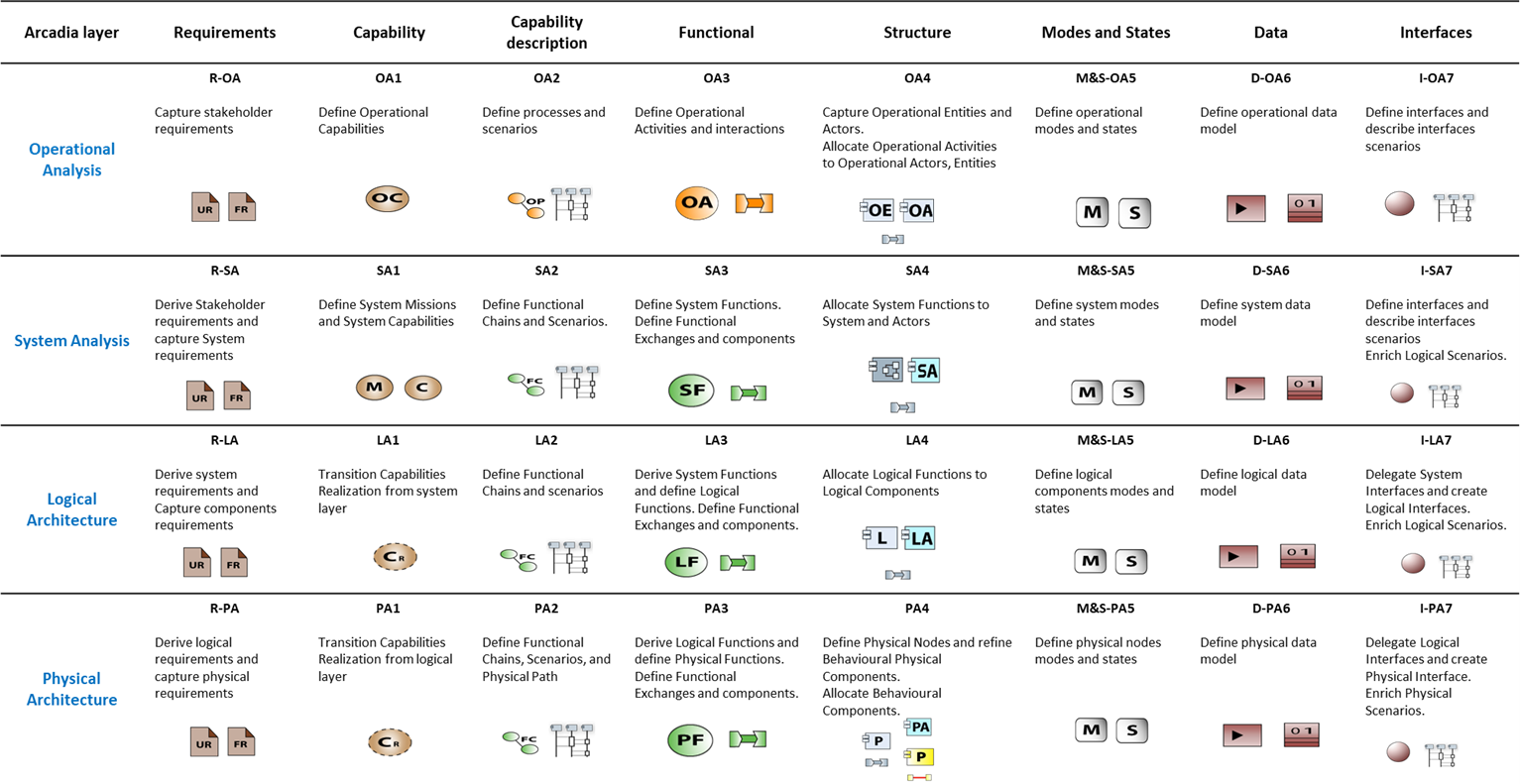
Arcadia is a tooled method devoted to systems & architecture engineering, supported by Capella modelling tool.
It describes the detailed reasoning to
It can be applied to complex systems, equipment, software or hardware architecture definition, especially those dealing with strong constraints to be reconciled (cost, performance, safety, security, reuse, consumption, weight…).
It is intended to be used by most stakeholders in system/product/software or hardware definition and IVVQ as their common engineering reference and collaboration support.
Arcadia stands for ARChitecture Analysis and Design Integrated Approach.
A series of online documents to dive into the principles and concepts of Arcadia:
Arcadia is a system engineering method based on the use of models, with a focus on the collaborative definition, evaluation and exploitation of its architecture.
This book describes the fundamentals of the method and its contribution to engineering issues such as requirements management, product line, system supervision, and integration, verification and validation (IVV). It provides a reference for the modeling language defined by Arcadia.
Jean-Luc Voirin, leader of the creation of the Arcadia method, along with some of the leaders on developing and deploying MBSE Arcadia & Capella practices in Thales. From right to left: Pierre Nowodzienski, Jean-Luc Voirin, Juan Navas, Stephane Bonnet, Frederic Maraux, Gerald Garcia, Philippe Fournies, Eric Lepicier.
Architecture as prime engineering driver
Arcadia, a model-based engineering method
Noticeable features of Arcadia
Definition of the Problem - Customer Operational Need Analysis
Formalization of system requirements - System Need Analysis
Development of System Architectural Design - Logical Architecture (Notional Solution)
Development of System Architecture - Physical Architecture
Formalize Components Requirements - Contracts for Development and IVVQ
Co-Engineering, Sub-Contracting and Multi-Level Engineering
Adaptation of Arcadia to Dedicated Domains, Contexts, Etc.
Equivalences and Differences between SysML and Arcadia/Capella
The Scream villain, Ghostface, has undergone a massive cultural resurgence. What was once purely a symbol of 90s slasher horror has been "reclaimed" by Gen Z and Millennial audiences as a figure of dark humor and even "fan-favorite" status.
This type of content thrives because it leans into the "slasher" tropes—suspense, the "final girl" archetype, and the mysterious nature of the masked antagonist—while flipping them into a collaborative performance. By featuring two "Ghostface" characters alongside Bronwin, the production creates a high-stakes, cinematic feel that distinguishes it from standard influencer vlogs. Why This Content Goes Viral Bronwin Aurora - Ghostface MMF Three...
Combining a horror icon with a popular lifestyle influencer creates a "forbidden" or "edgy" vibe that drives high click-through rates on platforms where viewers are looking for something outside the norm. Impact on the Creator Economy The Scream villain, Ghostface, has undergone a massive
Even those who haven't seen the movies know the mask. There are three main pillars to the success
There are three main pillars to the success of this specific collaboration:
Bronwin Aurora’s foray into themed, multi-creator projects like the Ghostface series marks a shift in the creator economy. Influencers are no longer just "posting photos"; they are acting as directors, producers, and stars of their own mini-franchises. By utilizing trending themes like "Ghostface," Bronwin is effectively hacking the algorithm while providing the high-quality entertainment her fans expect.